Introduction
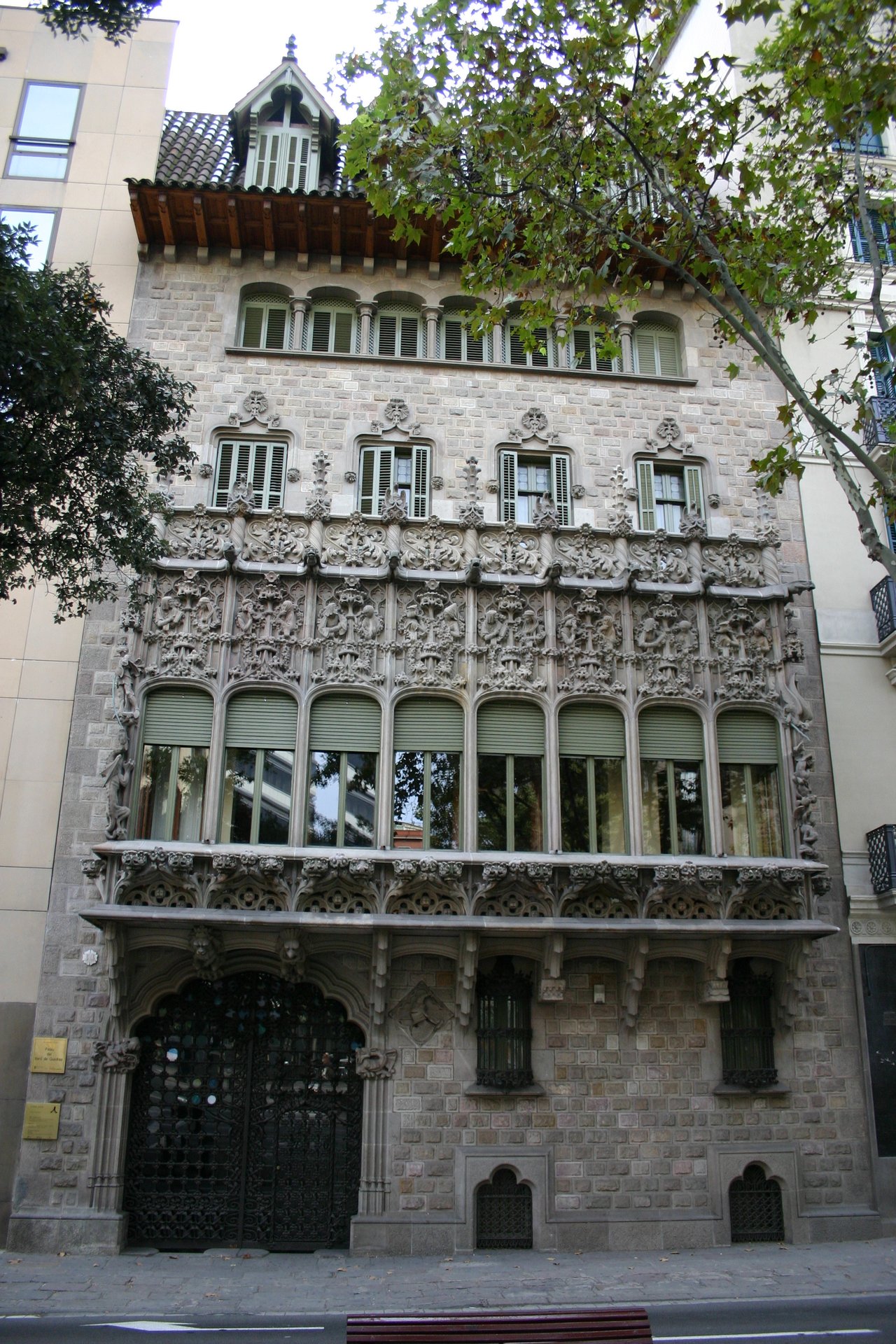
Palau del Baró de Quadras is one of those cases where the building itself is already a reason to pay attention. Located at Avinguda Diagonal, 373 in Barcelona, this modernist palace has a very distinct character: on one side it resembles a noble neo-Gothic house, while on the other it is an elegant urban mansion in the spirit of Catalan modernism. Today, it houses the Institut Ramon Llull, so it is not just a landmark but also a vibrant institutional space in the city.
If you love architecture, strolls through Eixample, and places that can be “read” through their facades, this is a must-visit. Palau del Baró de Quadras is perfect for those who want to see a less obvious but very characteristic Barcelona — a bit aristocratic, a bit modernist, very decorative, and not overwhelmed by tourist noise.
About the place — what it is, history, and significance
Palau del Baró de Quadras was built for Manuel de Quadras, and the architect was Josep Puig i Cadafalch; the main work was carried out between 1904 and 1906. The building is located in the Dreta de l’Eixample area, within the so-called Quadrat d’Or, where much of Barcelona's modernist architecture is concentrated.
In terms of status, it is not just a beautiful building, but a historical and artistic monument of national significance; sources also note that in 1976 it was recognized as a national cultural heritage site. The history of the palace is interesting as it has changed functions: after being a private residence, it has housed various institutions at different times, and today the building is the headquarters of the Institut Ramon Llull.
A separate attraction of the palace is its eclecticism. An official city source describes the interior as a combination of modernism, neo-Gothic, and neo-Arab motifs, and the facades of the building create different impressions depending on the angle from which you approach. This is what makes it so photogenic: it is not “readable” at first glance but gradually reveals itself in details.
What to see and do — main highlights
First and foremost, you should linger by the facade on the side of Avinguda Diagonal. It most closely resembles Northern European palaces and neo-Gothic architecture, with carved decorative elements that emphasize the noble character of the building. However, if you walk around the house and look from the other side, the feeling will be completely different: here, Palau del Baró de Quadras reads more like a modernist residential building of Eixample.
Inside, the building retains a very interesting spatial concept. Wikipedia notes that the layout corresponds to the typical scheme of Eixample houses: the first floor was intended for the owners, while the others were for rent. This is an important detail as it explains why the palace looks both representative and very urban, practical for its time.
If you are lucky enough to join a tour, pay attention to the decorative interior, which the official tourist resource of Barcelona describes as multilayered and very eclectic. In such a place, it is particularly interesting not just to “look at the house,” but to see how the architect combined medieval allusions, modernist plasticity, and prestigious urban representativeness.
How to get there — full address, metro/transport, landmarks
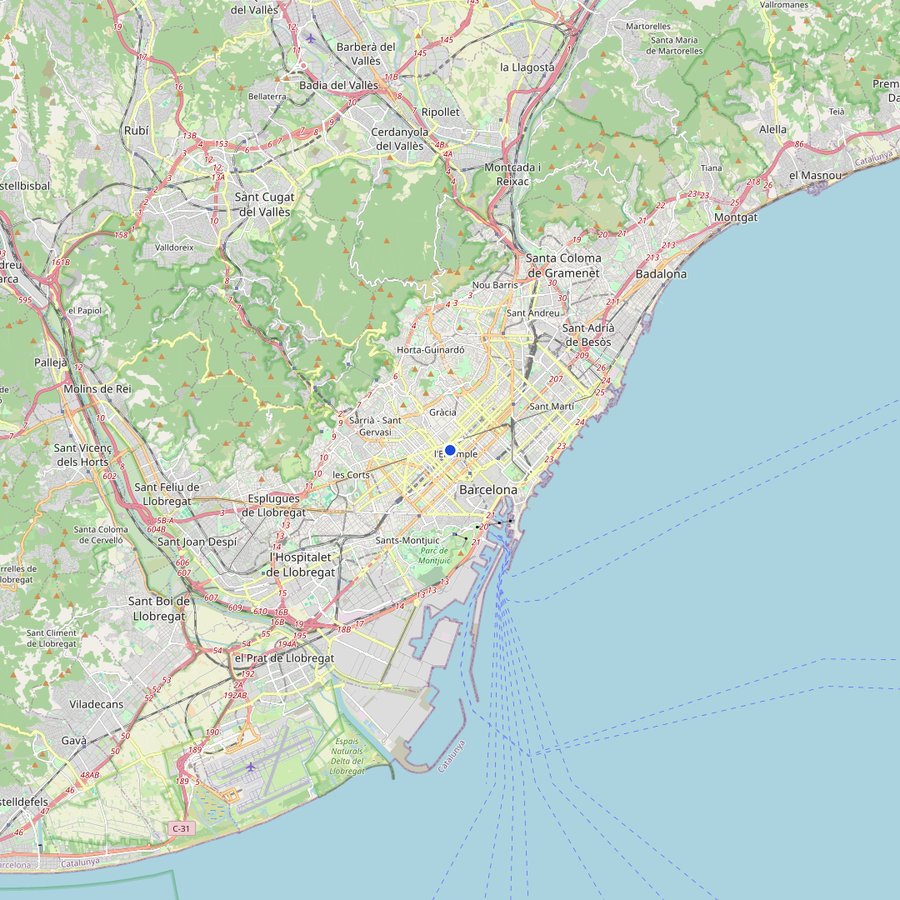
The address of the palace is Avinguda Diagonal, 373, 08008 Barcelona. It is located in the Eixample district, in the la Dreta de l’Eixample neighborhood. As a landmark, it is convenient to remember that the building is situated between two very famous modernist points in Barcelona — La Pedrera and Casa de les Punxes; Wikipedia directly states that the palace is approximately equidistant from them.
The easiest way to get here is on foot if you are walking around the central part of Eixample, or you can take public transport to stops on Diagonal and then walk for a few minutes. Its location on a wide avenue makes the building very easy to include in an architectural walking route without a separate “approach” just for it.
Hours and prices — schedule and entrance fees
Official data provided in the city’s tourist materials and visiting catalogs indicate guided visits on Wednesdays and Saturdays at 11:00, 12:00, and 13:00. It is also noted that for groups, pre-arranged visits from Monday to Friday are possible in the morning or afternoon, but only with prior booking.
Regarding the cost, available sources mention a standard ticket of €14, a reduced ticket of €12.60, a separate reduced price of €6 for children aged 7–12 years, and free entry for children under 7 years. A group rate of €12 is also mentioned for a minimum of 15 people. Since prices and schedules may change, it is best to refer to the current official record before planning your visit.
For whom — date / family / friends; how much time to allocate
This is a very suitable place for a date if you enjoy a calm urban aesthetic, architecture, and a stroll without crowds. Here, it is easy to combine cultural interest with beautiful photos, and you won’t have to spend half a day: usually, a brief visit is enough if you take a tour or just walk around.
For a family, the palace is also suitable, but rather as part of a route through central Barcelona than as a standalone “child-friendly” location. For friends who love modernism, this is a very apt stop: the place is not too large, yet it offers many topics for conversation — from Puig i Cadafalch to the history of Eixample. If planning without haste, I would allocate about 30–60 minutes here, and if you want to explore the surroundings in more detail, then even longer.
Visitor tips — when is best, what’s nearby, life hacks
The best time to visit is in the first half of the day when the light better highlights the relief of the facade and decorative details. The building is particularly interesting when viewed from different angles: don’t limit yourself to just a frontal photo from Diagonal, as the essence of the palace lies in its various “faces.” If you love photography, walk around the house and see how it changes depending on the angle of view.
It makes sense to logically combine a walk with other modernist stops in Eixample, primarily with La Pedrera and Casa de les Punxes, as Palau del Baró de Quadras stands right in this very rich architectural stretch of the city. And if you want to see the building without haste, it's better to plan your visit not "on the way to somewhere," but as a separate walk along Diagonal — this way it makes a much stronger impression.
Do you prefer to see this building as an architectural gem or as part of a grand walk through modernist Barcelona?