Commercial Court of Paris: What to See on Île de la Cité
If you are strolling through the center of Paris and find yourself on Île de la Cité, pay attention to the building of the Commercial Court of Paris. It is not a museum in the traditional sense, but an active judicial institution; however, its palatial appearance and location make it a notable landmark of the urban ensemble.
A Building with History
The Paris Commercial Court dates back to 1563 when a jurisdiction was established in Paris to handle commercial disputes. In 1790, such institutions were named "commercial courts," and the Paris court was officially established by decree in 1791.
The current building was constructed on Île de la Cité between 1859 and 1865, designed by architect Antoine-Nicolas Bailly. It was solemnly inaugurated on December 26, 1865, under Napoleon III, and the first session took place the very next day.
What to Pay Attention To
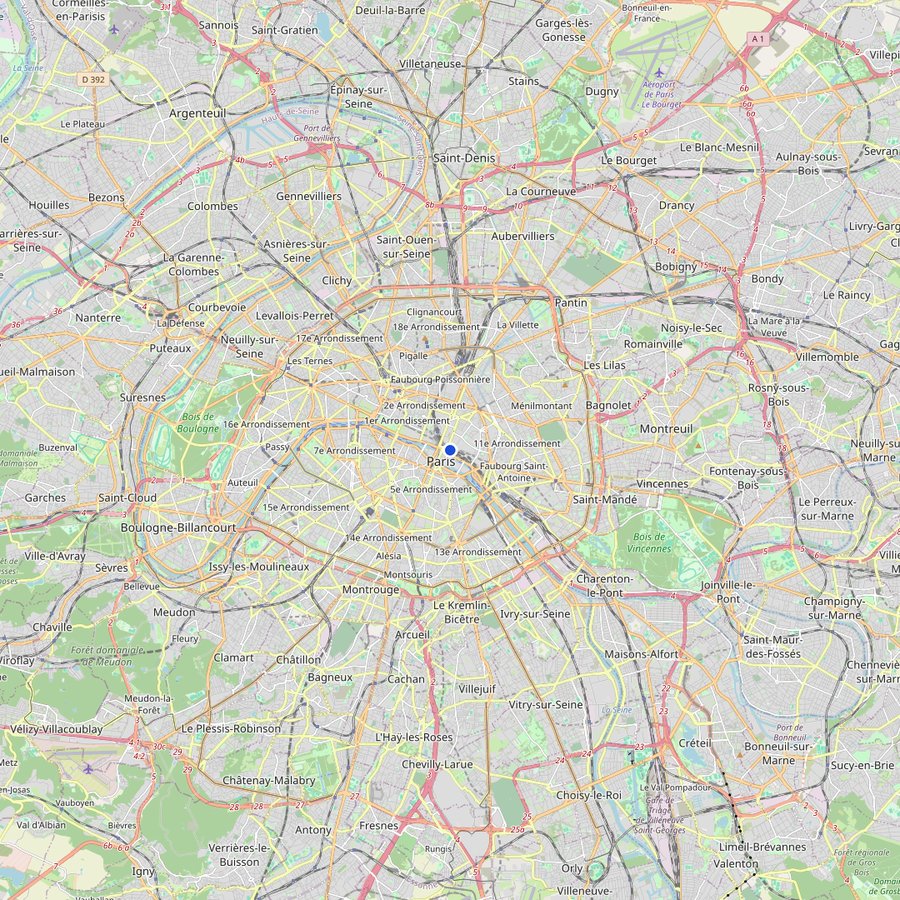
The court is located between Boulevard du Palais, Quai de la Corse, the Flower Market, and Rue de Lutèce. The main entrance faces Quai de la Corse, so in the Parisian context, the building is sometimes simply referred to as "Quai de la Corse."
Externally, the structure resembles a Renaissance palace, and among its striking details are a large dome and a grand double spiral staircase. The staircase is designed in the Renaissance style and was restored in 2021.
Is It Worth Going Inside?
Yes, if you are interested not only in the Eiffel Tower and postcard facades but also in places where real urban life takes place. Here, commercial disputes and cases related to business activities are considered, making it primarily a functional judicial institution rather than a tourist attraction.
It is best to perceive the Commercial Court of Paris as a brief but meaningful stop during your walk on Île de la Cité. It is conveniently reachable on foot from the Cité or Châtelet metro stations, and nearby are the Flower Market, Notre-Dame, and the banks of the Seine.
If you are in this part of Paris, take a look at the building — do you enjoy finding such unassuming yet historically significant places?