
Introduction
The National Museum of Natural History in Kyiv is one of those places where a trip "just to take a look" can easily turn into a longer and much more interesting walk. It is located right in the city center at 15 Bohdan Khmelnytsky Street, just a few minutes' walk from the "Teatralna" or "Zoloti Vorota" metro stations, making it convenient to drop by spontaneously or as a dedicated outing.
If you enjoy museums that offer more than just "looking at a display case," but provide a true sense of journey through nature, eras, and the scales of life on Earth, this place is definitely worth your attention. It will be equally interesting for those who love dinosaurs, dioramas, geology, botany, or simply well-designed museum spaces.
About the place — what it is, history and significance, interesting facts
The National Museum of Natural History of the National Academy of Sciences of Ukraine is one of the largest natural history museums in Ukraine and one of the major natural history museums in the world. It was established in 1966 as a single complex, merging several separate museums that previously belonged to different academic institutions. That’s why it feels like a thoughtfully structured scientific institution with various directions rather than a random "collection of exhibits."
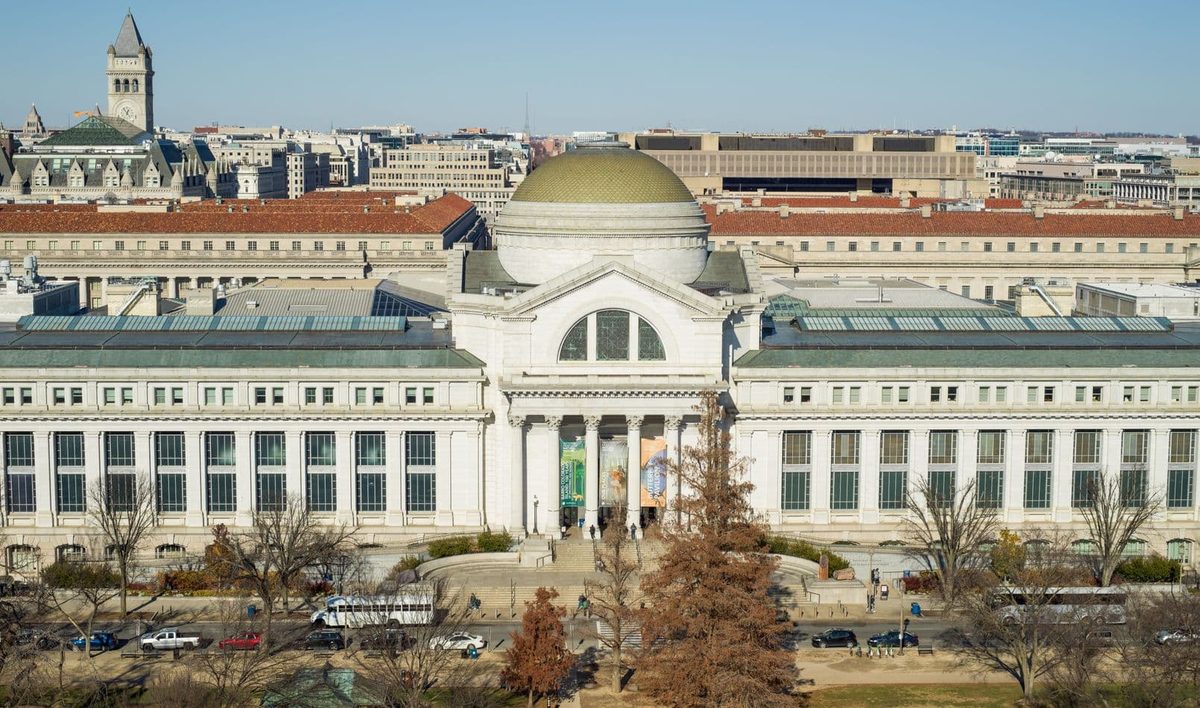
The museum is housed in an ancient neoclassical building, which adds a special atmosphere to your visit even before you enter the halls. There are 24 halls in the museum, covering a total area of about 8,000 square meters, and the collection boasts over 30,000 exhibits. The exhibition covers geology, paleontology, zoology, botany, and archaeology, and also shows how nature and life have changed in the territory of Ukraine.
One of the museum's strong points is its dioramas and landscape compositions. There are 24 of them, and they often leave a lasting impression, just like individual rare exhibits. The museum also conducts scientific work, so it is not just an exhibition space but an active academic institution.
What to see and do — main highlights
The museum usually draws the most attention with its large thematic exhibitions and dioramas, where nature is presented not as a fragment but as a complete scene. This format makes it easy to "get lost": you start by looking at the big picture and then begin to examine the small details, animals, landscapes, and the history of the environment.
On the museum's website, they highlight features such as a 3D tour of the museum, a karst cave, and the "mammoth bone hut." This is already a good indicator that the museum focuses not only on classic display cases but also on very visual, almost theatrical exhibitions. If you love museums that create a sense of presence rather than just facts on plaques, you will find it interesting here.
Another strong reason to visit this place is that the museum is well-suited for a leisurely exploration. You can view it attentively or more casually, choosing only the most interesting halls. However, if you want to fully experience the place, it’s better to allocate at least one and a half to two hours.
How to get there
The museum's address is Kyiv, 15 Bohdan Khmelnytsky Street. The easiest way to get there is by metro to the "Teatralna" station; there is also "Zoloti Vorota" nearby. The museum is very close to the "Teatralna" metro station, making it one of those Kyiv museums that you can easily visit without complicated logistics.
The orientation is very simple: it’s in the central part of the city, so the museum can easily be combined with a walk around Zoloti Vorota, the university district, or the nearby boulevards. If you are going for the first time, it’s best to just follow the signs to Bohdan Khmelnytsky Street and look for the museum's sign on site.
Hours and prices
The museum is open from Thursday to Sunday from 11:00 AM to 6:00 PM. Monday, Tuesday, and Wednesday are days off, and the ticket office closes half an hour earlier, so it’s better not to risk arriving late.
A full ticket costs 160 UAH, and a concession ticket is 100 UAH. The official website also states that there are separate conditions for tours: a basic English-speaking tour costs 300 UAH plus 100 UAH for each additional person. Other services are also specified, including visiting the "Karst Cave" diorama — 10 UAH per person, as well as other types of tours and paid programs.
For whom
This is a very good place for a date if you want a calm walk without rush, but with a topic for conversation and a sincere "wow!" It is also well-suited for families with children, especially if the child is interested in animals, stones, ancient worlds, and large halls with dioramas. You can also go here with friends without hesitation if you want something meaningful rather than a standard city walk.
For a leisurely visit, you should allocate about 1.5 to 2.5 hours. If you want to take your time, carefully examine the exhibits, and not miss the small details, it may take even longer.
Visitor tips
It’s best to come in the first half of the day or closer to the museum's opening time to avoid rushing and catching the already "tired" part of the day. Since the museum is open only four days a week, it’s better to plan your visit in advance, especially if you want a tour as well.
If you have time, I highly recommend combining your visit with a walk around central Kyiv — the museum is located in a place that fits well into a route through the historical center. Also, don’t rush through the halls "on the surface," because in such natural history museums, the main pleasure often lies not in one or two top exhibits but in the overall feeling of a grand, thoughtful story about the Earth.
Do you prefer museums with impressive dioramas or those where you can spend time examining small scientific exhibits?