
South Korea is not just Seoul and the popular landscapes of Jeju: there are places where it’s more interesting to slow down and take in the scenery. Two of the three gems are on one island, but each reveals it from a different side.
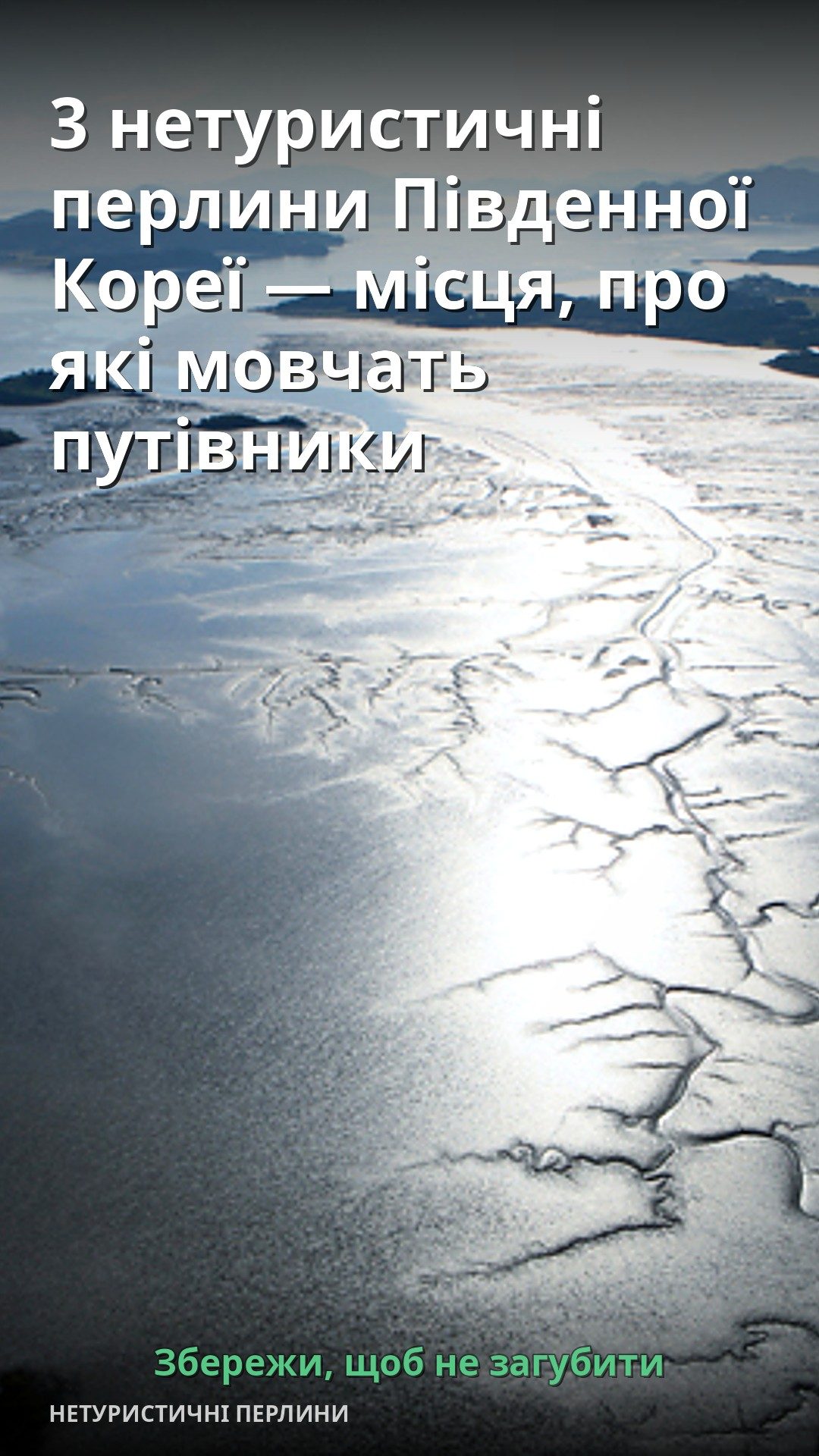
Tidal Flats of Posong-Sunchon
On the coast of Posong and Sunchon, there are tidal flats known as getbol. This is not just a shore that changes with the tide: thousands of species of organisms live here, and for migratory birds, these wetlands are an important stop on their journey between South Asia and Oceania. In Sunchon, the flats are adjacent to salt marshes and reed beds, making it a great choice for those interested in nature and birdwatching, rather than just urban routes.
Volcanic Jeju
Jeju is worth a trip if you love landscapes shaped by volcanoes: the island has basalt formations, craters, and lava tunnels. The UNESCO World Heritage site encompasses three parts — the Hallasan Mountain Nature Reserve, the Geomunoreum Lava Tube System, and the Seongsan Ilchulbong Tuff Cone, which rises above the sea. This is not just one separate attraction, but a whole set of different landscapes, making Jeju particularly suitable for those who want to combine hiking with geological interest.
Geomunoreum Lava Tunnels
Geomunoreum is part of Jeju's natural heritage but deserves special attention: the system consists of about twenty lava tunnels formed by lava flows. Inside, you can see dark lava walls and colorful mineral formations — a completely different world compared to the open coastlines of the island. Visiting Geomunoreum requires advance booking, so it’s best to plan this place ahead.
If you want peace and wildlife, choose the tidal flats of Posong-Sunchon; if you are more fascinated by volcanic forms — Jeju and Geomunoreum. Which of these gems do you find most interesting?