
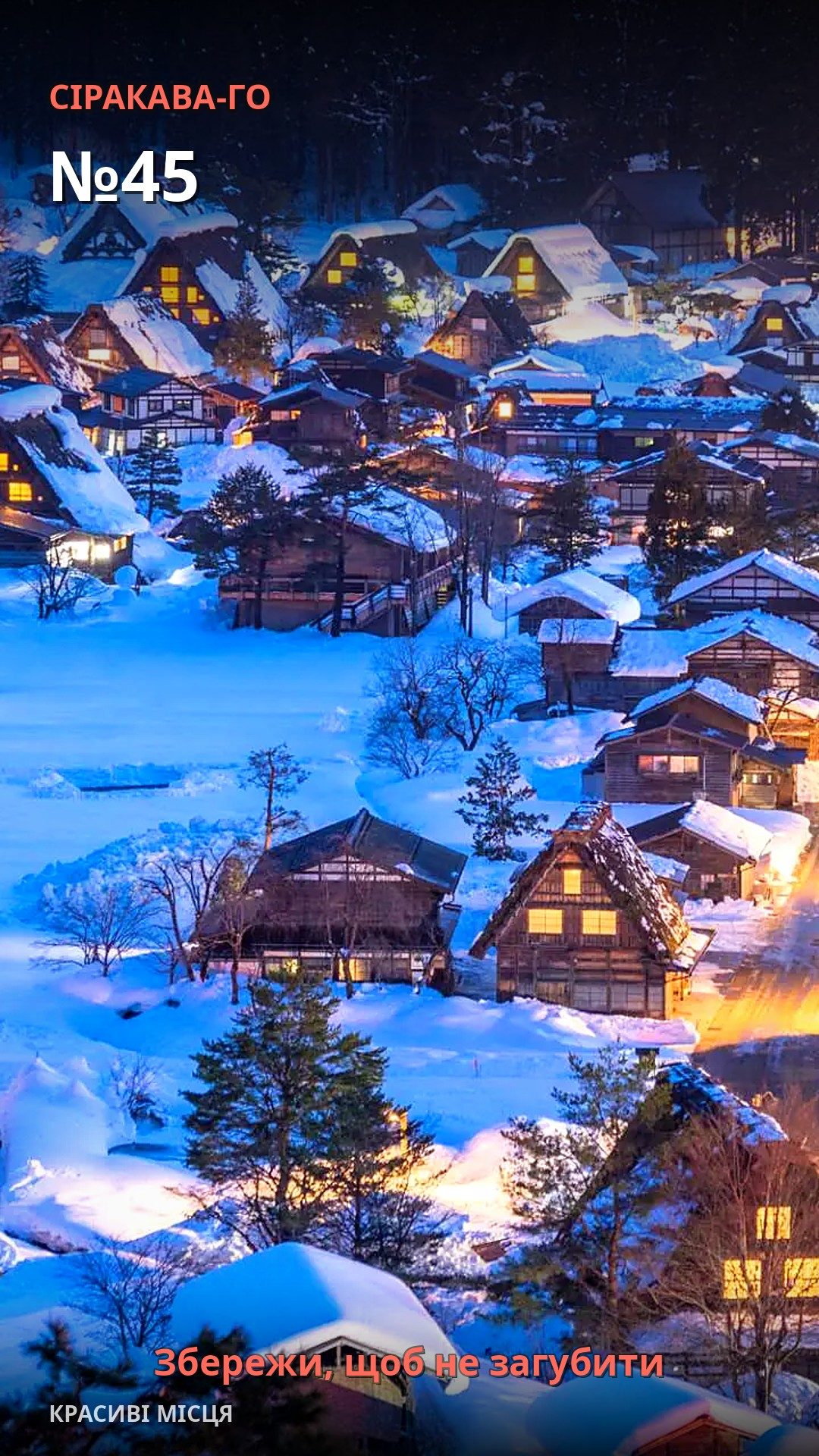
Shirakawa-go is a mountain village in Japan's Gifu Prefecture, worth visiting for its wooden gassho-zukuri houses and the changing scenery with the seasons. Their steep thatched roofs resemble hands folded in prayer — and serve a very practical purpose.
What Makes the Houses Special
In the Ogimachi area, 59 such houses have been preserved, built approximately 100–300 years ago. The steep roofs help reduce the load from snow, preventing its weight from damaging the structure. The village was added to the UNESCO World Heritage list in 1995.
In winter, Shirakawa-go is covered in snow, while in spring, summer, and autumn, Ogimachi has a tranquil rural appearance. If you enjoy winter landscapes, evening illuminations are held during snowfalls; prior reservation is required to attend such events.
Is It Worth Visiting?
Yes, if you are interested in traditional Japanese architecture and places where beauty is intertwined with everyday life. The roofs need repairs approximately every thirty years, and local residents collectively replace the thatch — this mutual aid is called "yui." Such a tradition helps preserve the houses and pass on skills to the next generations.
In winter, the road to the village is accessible, although heavy snowfall can occur. So, Shirakawa-go is a great idea for a leisurely trip if you are prepared for mountain weather and want to see not only picturesque roofs but also the living history of the local community. Would you prefer to see the village in the snow or among the greenery?