
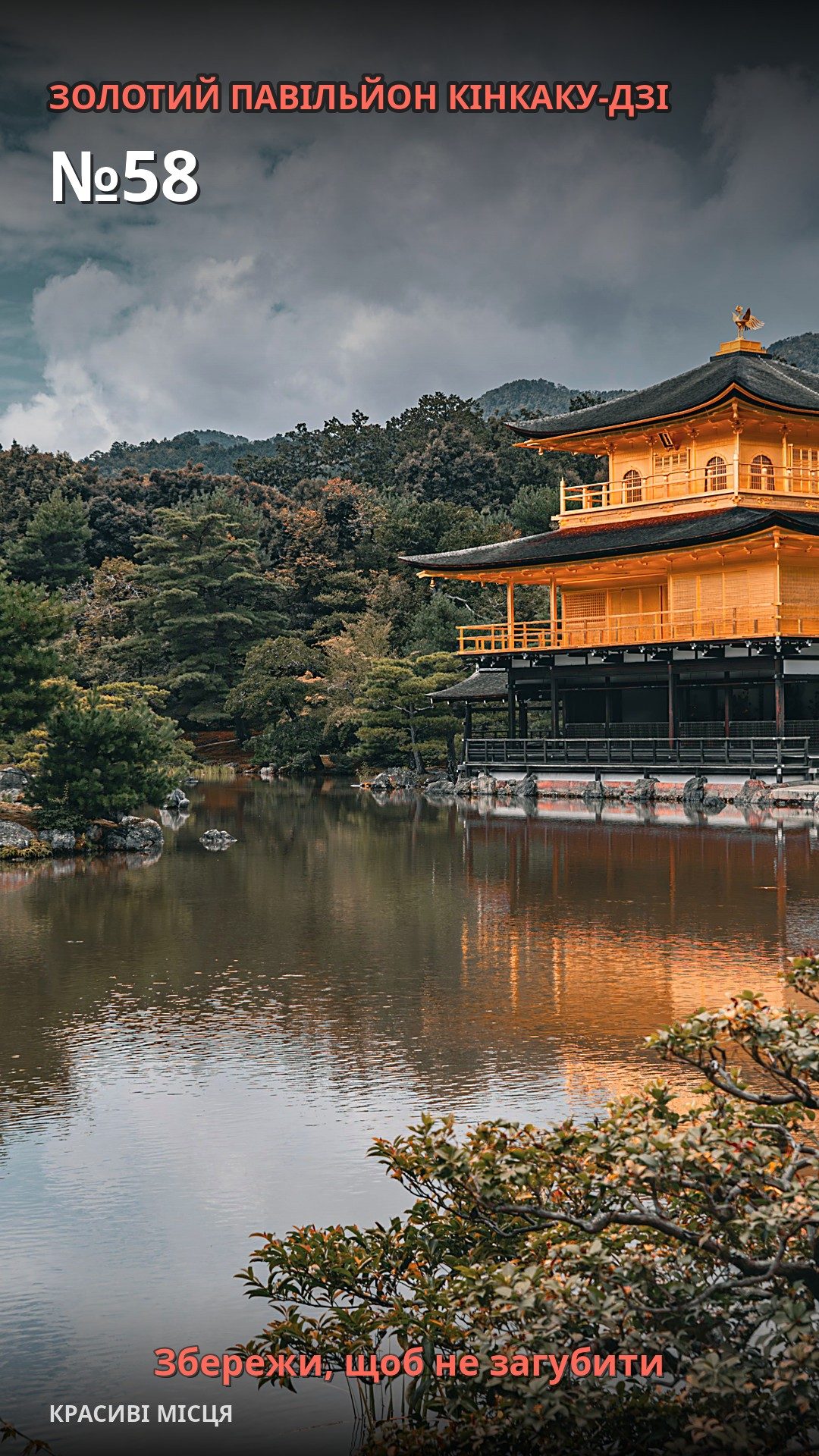
Kinkaku-ji is worth seeing if you want to experience Kyoto through one of its most recognizable landscapes: the golden pavilion reflecting in the water among islets and pines. It’s not just a beautiful structure for photos — there is a story behind it, and a garden surrounds it, which is pleasant to stroll through at a leisurely pace.
What You Will See
Kinkaku-ji is the common name for the Rokuon-ji temple. The pavilion was originally a suburban residence of the shogun Ashikaga Yoshimitsu, and after his death, it became a Zen Buddhist temple. The gilded building reflects in the Kyoko-chi pond, which is also called the "Mirror Pond," so the impression changes depending on where you look from.
The current structure was rebuilt in 1955 after a fire. It still serves as a repository for sacred relics, and the garden around the pavilion is a separate part of the experience: there is also a tea house on the premises.
Is This Stop Right for You?
Go if you enjoy gardens, peaceful walks, and landscapes that you want to admire rather than just quickly photograph. The combination of gold, water, stone islets, and pines works strongest here — it is for this reason that Kinkaku-ji has become one of the most famous images of Kyoto.
If you plan to travel from Kyoto Station, the city’s tourist association recommends taking the subway to Kitaoji Station, and from there, a bus to Kinkaku-ji-michi stop; it’s about a five-minute walk from the stop to the entrance. A direct bus may seem simpler, but it often gets delayed due to numerous stops and traffic.
If you love places where beauty unfolds not only in the structure itself but also in its reflection and the surrounding garden, Kinkaku-ji is well worth your time. Would you stop by for this view?