
The evening "Elegy of Wartime" at the National Opera of Ukraine is scheduled for September 10, 2026, at 17:00, with the end time indicated on the poster as 18:45. This is a concert-ballet event featuring music by Valentyn Sylvestrov with the subtitle "Spring and Autumn. Variations on Donizetti"; if you love contemporary stage language where music and movement work subtly and without excessive pathos, this could be a very fitting evening. The event takes place at the country's main opera theater located at 50 Volodymyrska Street in Kyiv, so it’s also an opportunity to visit one of the most grand cultural interiors of the city.
About the Event
In format, this is neither a conventional opera nor a purely classical ballet, but a stage composition based on four postludes for piano and string orchestra and rural music from the 1930s. On the theater's page, the event is presented as part of the repertoire for the 159th season, and the premiere performances of this production at the National Opera already took place on June 22 and 23, 2024. So, you are not looking at a one-time improvisation, but rather a well-formed production that is returning to the poster.
The event is announced as an evening starting at 17:00 and lasting until 18:45, making it a fairly compact format without the risk of "falling out" for half a day. For the audience, this is a convenient option if you want to make it to both the performance and a quiet dinner afterwards.
Plot and Mood
From the very title and musical material, it is clear that what matters here is not a literal plot or linear action, but the mood, memory, and inner tension. This is a case where the stage speaks more in images than in explanations, and Sylvestrov's music sets a soft, yet not superficial emotion. If you are drawn to performances that do not "press" with drama but slowly unfold, this evening may resonate with you.
Here, the sense of time likely works strongest: calmer fragments, the shadow of history, movement between the past and the present. For the viewer, this is not a light entertainment on autopilot, but rather attentive listening and wonder, after which you may want to linger in silence a bit longer.
Production
The production is directed by Olexiy Ratmansky, a distinguished artist of Ukraine, with Tetiana Ratmanska listed as the assistant choreographer. Conducting is by Serhiy Holubnychy, the ballet tutor is Tetiana Beletska, a people's artist of Ukraine, and among the concertmasters are Oksana Horobiievska, Dinara Sabitova, and Vitaliy Lyman. The scenography is created by Wendall K. Harrington, and the costumes are by Moritz Junge.
Visually, the performance also relies on the works of Matviy Vaisberg and Maria Prymachenko, used in the stage design. This is already a good sign for those who appreciate not just a beautiful "wrapper" but an expressive imagery world, where the Ukrainian context is felt not declaratively, but very theatrically.
Among the performers scheduled for this date are Olha Holytsia, Tetiana Lyozova, Anastasiia Shevchenko, Oleksandra Panchenko, Yan Vanya, Mykyta Sukhorukov, Yaroslav Tkachuk, Volodymyr Kutuzov, and Yevhen Lohvynenko. The full division of roles is not provided on the official page in the given description, but the cast appears strong and experienced.
How to Get There, Duration, and Intermissions
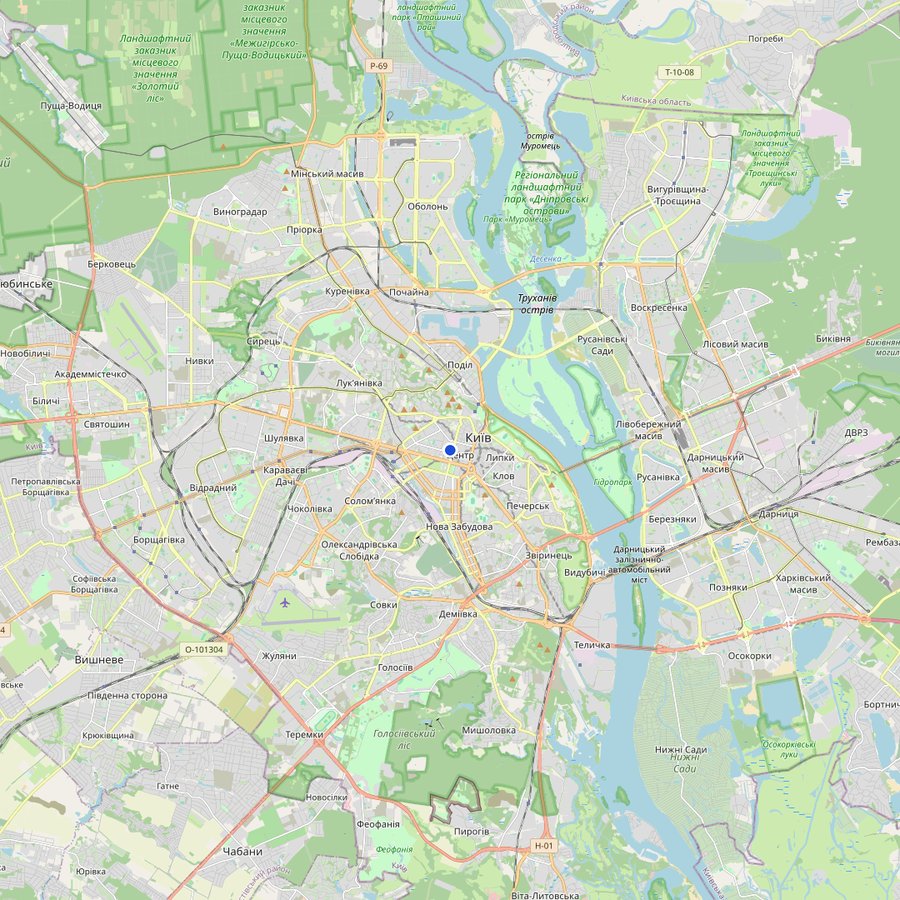
The National Opera of Ukraine is located at 01030, Kyiv, 50 Volodymyrska St.. The easiest way to navigate is to the "Zoloti Vorota" metro station: this is the city center, so it’s not difficult to reach here on foot from several central points or by public transport. The theater itself stands in a very recognizable place, so you are unlikely to confuse the route.
The poster for this performance indicates the time 17:00–18:45, and there is no separate information about intermissions in the provided description. Therefore, it is more honest to perceive this as an evening without an elaborate "intermission" scenario and to plan your time without expecting a long pause in between.
Prices and Who It's For
The provided data does not include the exact ticket prices for this performance, so quoting figures would be speculative. For such events in a large theater, tickets usually range widely, and it’s best to focus on which specific section of the hall is comfortable for you.
This feels like a good option for those who appreciate culture with subtext: for a date when you want something other than a banal program; for an evening with a friend if there is a shared interest in music and contemporary stage; and for a viewer who has already seen the classical repertoire and wants something more nuanced. However, if you expect a very plot-driven, "straightforward" performance, you may feel that everything relies more on atmosphere than on eventfulness.
Tips for the Audience
Arrive a little earlier to walk into the hall without haste and not to rush up the stairs at the last minute. For the National Opera, neat city or semi-formal attire is appropriate: this is not a place for strict dress codes, but the atmosphere of the building itself calls for a bit of composure and respect for the evening.
If you plan to have a drink during the intermission or take a short walk in the foyer, allow time for this in advance, as the city center can be lively in the evening. And after the performance, it’s particularly nice to either take a little stroll around or immediately transition to a calm conversation — this event seems to be one of those that you don’t want to "close" right away.
Do you prefer such a quiet, focused evening at the theater, or do you still want something more vibrant and plot-driven?